Rain, rest, and how long the grass will hold
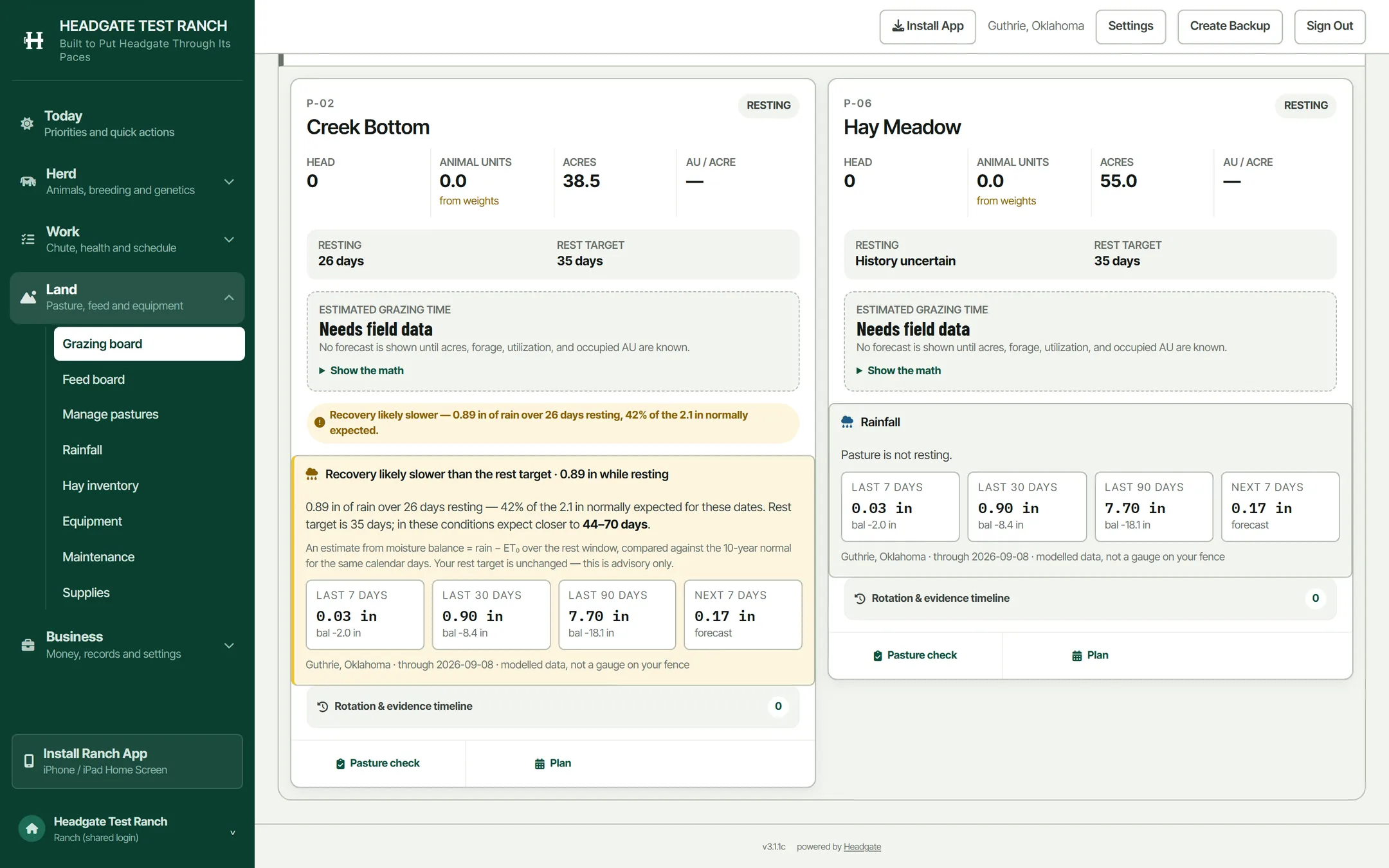
A rest target is a number you set in a good year. This tells you what the weather has done to it since.
Rain while resting is not a weather app number
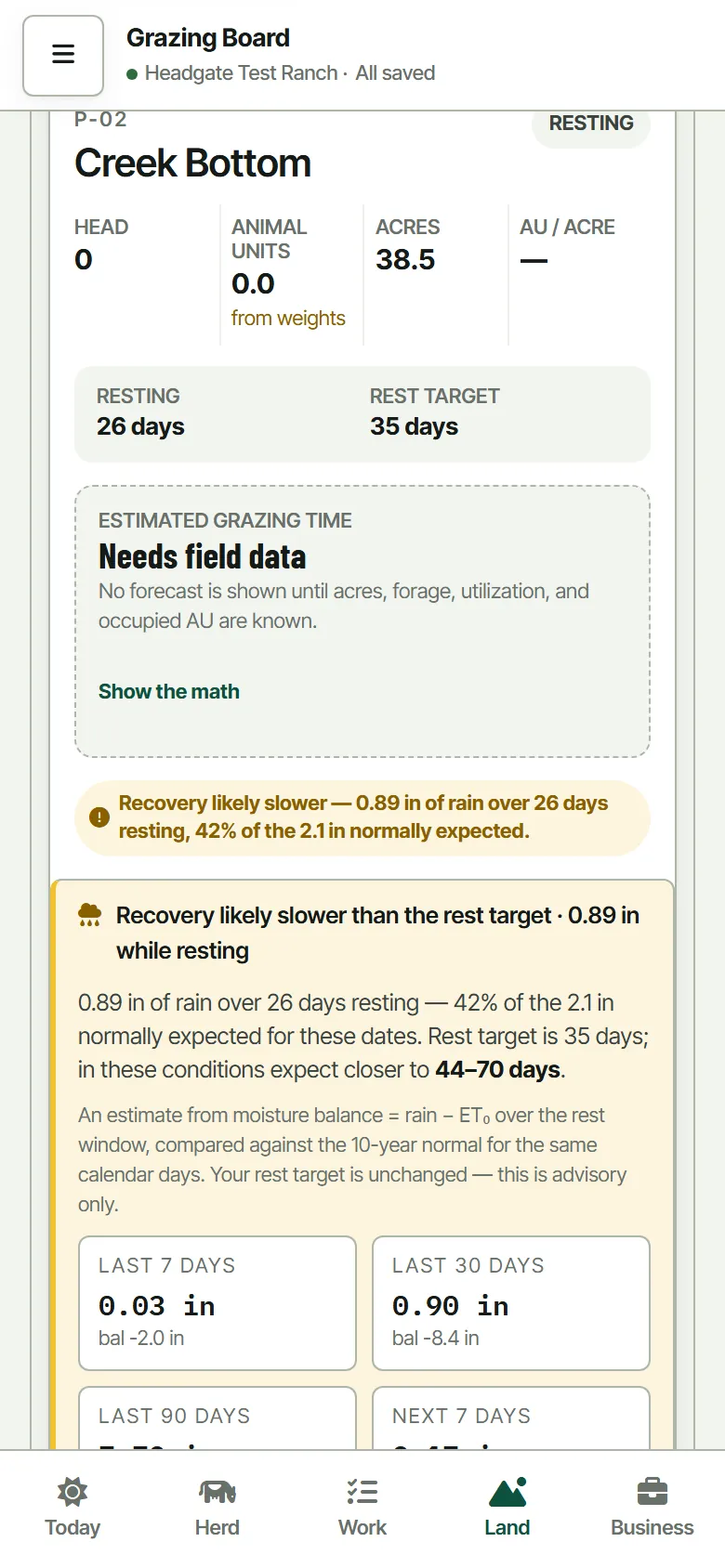
Any phone can tell you it rained. Only something that knows your rotation can tell you how much has fallen on that pasture since the cattle came off it. That is the number the rest target actually depends on, and it is the one nobody has.
Balance, not just rainfall
Rain minus reference evapotranspiration over the rest window, set against the ten-year normal for the same calendar days. Half an inch in October is not half an inch in July, and the balance figure is what separates them.
It does not move your target
The advisory says recovery looks slower or faster and shows the evidence. Your rest target is unchanged and the pasture stays in the lane you put it in. Overruling a number the rancher set is exactly what this refuses to do.
Guthrie, Oklahoma · through 2026-09-08
modelled data, not a gauge on your fence
Off by default, and it stays off until you turn it on.
Rainfall tracking asks a public weather service for daily rain and evaporation at each pasture's own location. What leaves this deployment is a coordinate and a date range, rounded to about half a mile, so it names a general area rather than your place.
No animal record, no herd count and no financial record ever goes out with it. Each pasture carries its own postcode as well, because leased ground twenty miles off can be in genuinely different weather from the home place, and a pasture that quietly borrowed the home ZIP would be wrong in a way nobody would catch.
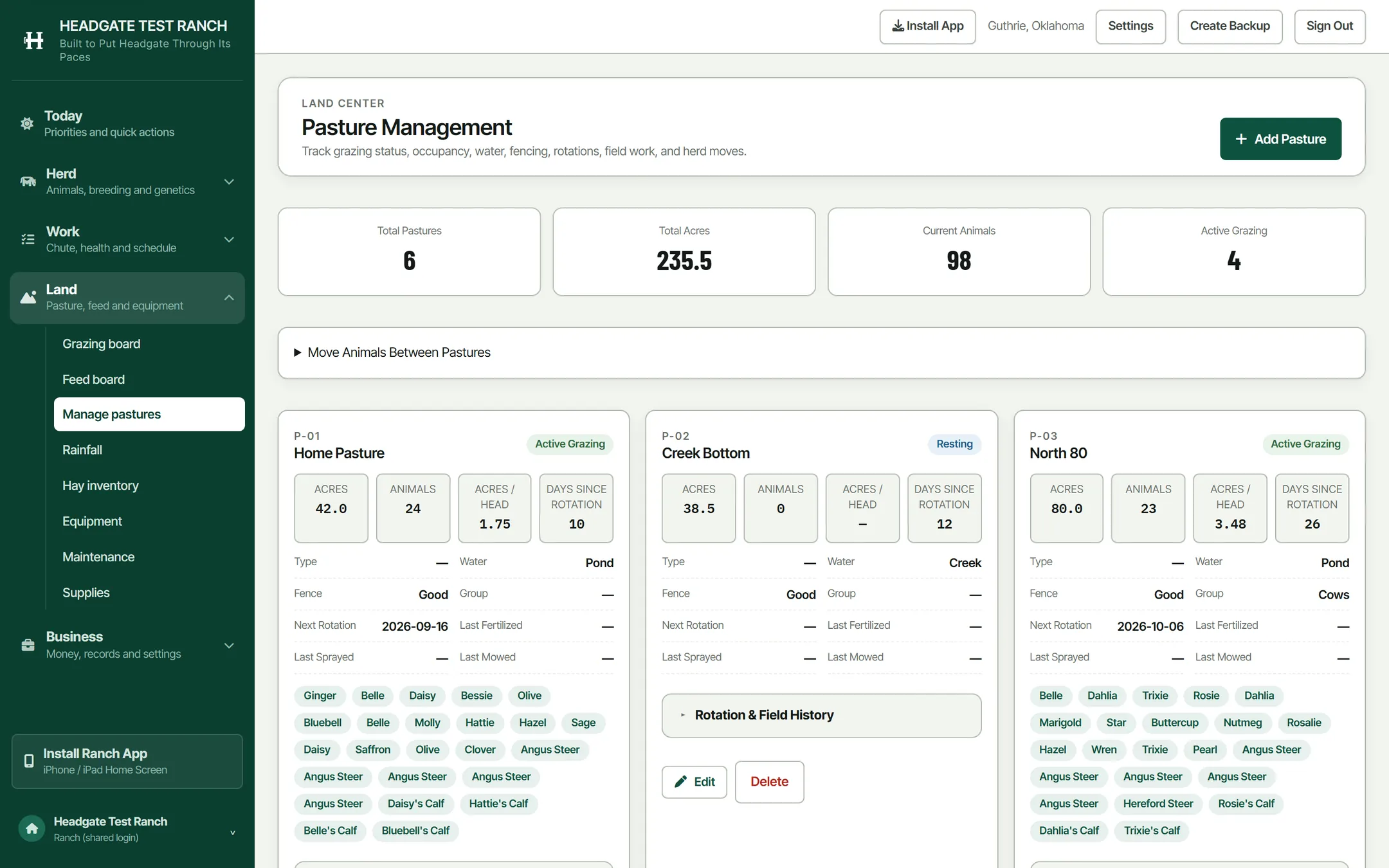
The grazing board.
Where the cattle are, what needs attention first, and how long the forage in front of them may last.
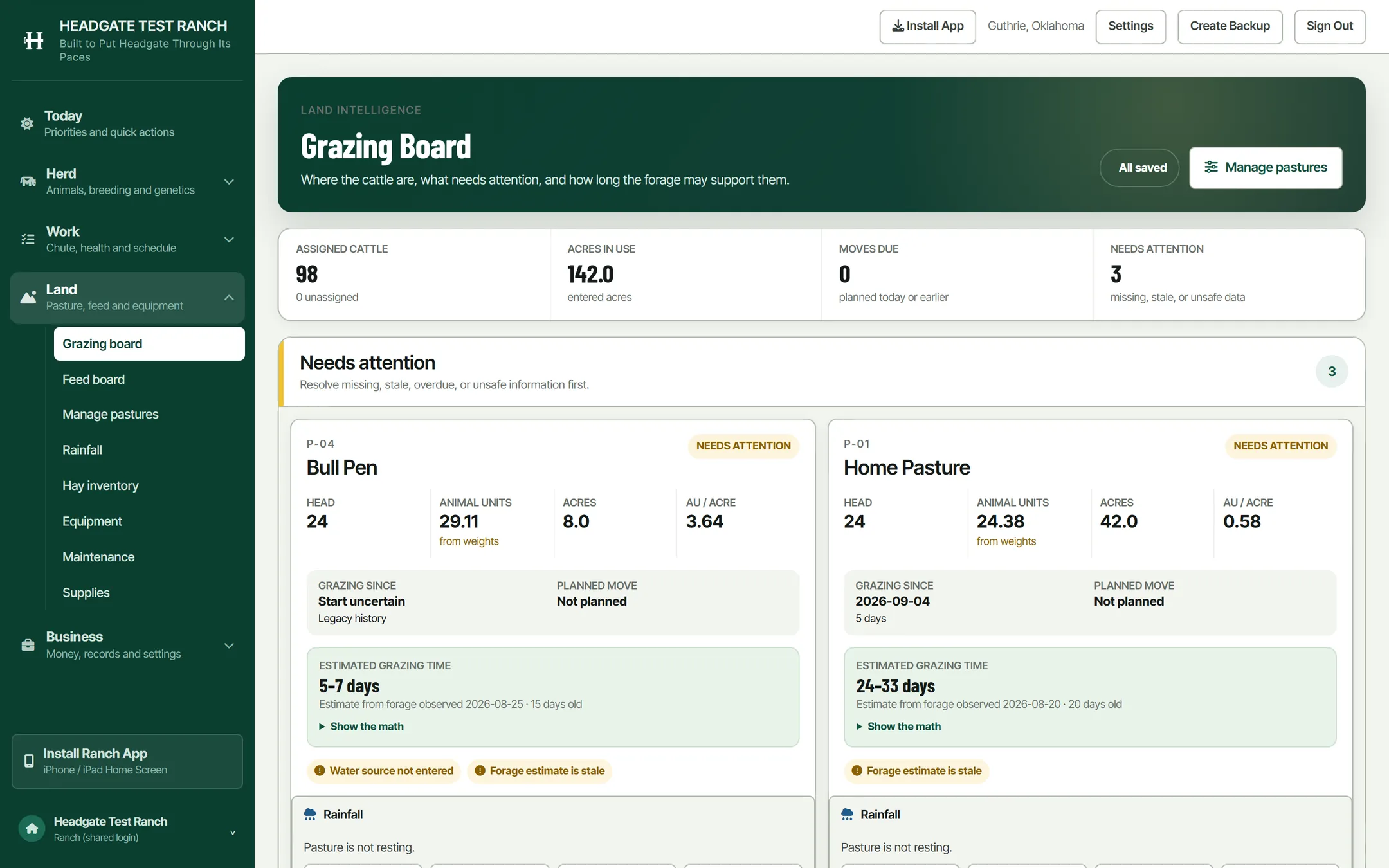
Attention first
Pastures with missing, stale or unsafe information float to the top: no water source entered, a forage estimate twenty days old, a move planned for last week. The board would rather tell you it does not know than give you a confident wrong answer.
Show the math
Every grazing-time estimate opens up into the arithmetic underneath it: acres, dry matter per acre, utilisation, residual, and the animal units standing on it. If you disagree with the estimate you can see exactly which input to argue with.
Moves are records
Move a bunch and it writes the date they came off and the date they went on, which is what starts the rest clock and what the rainfall advisory reads. It is also how a pasture's history reads back later as a rotation rather than a guess.