Bottles, lots, and which one to open first
Enter the receipt once. It becomes stock on the shelf, lots with expiry dates, and an expense, in one go.
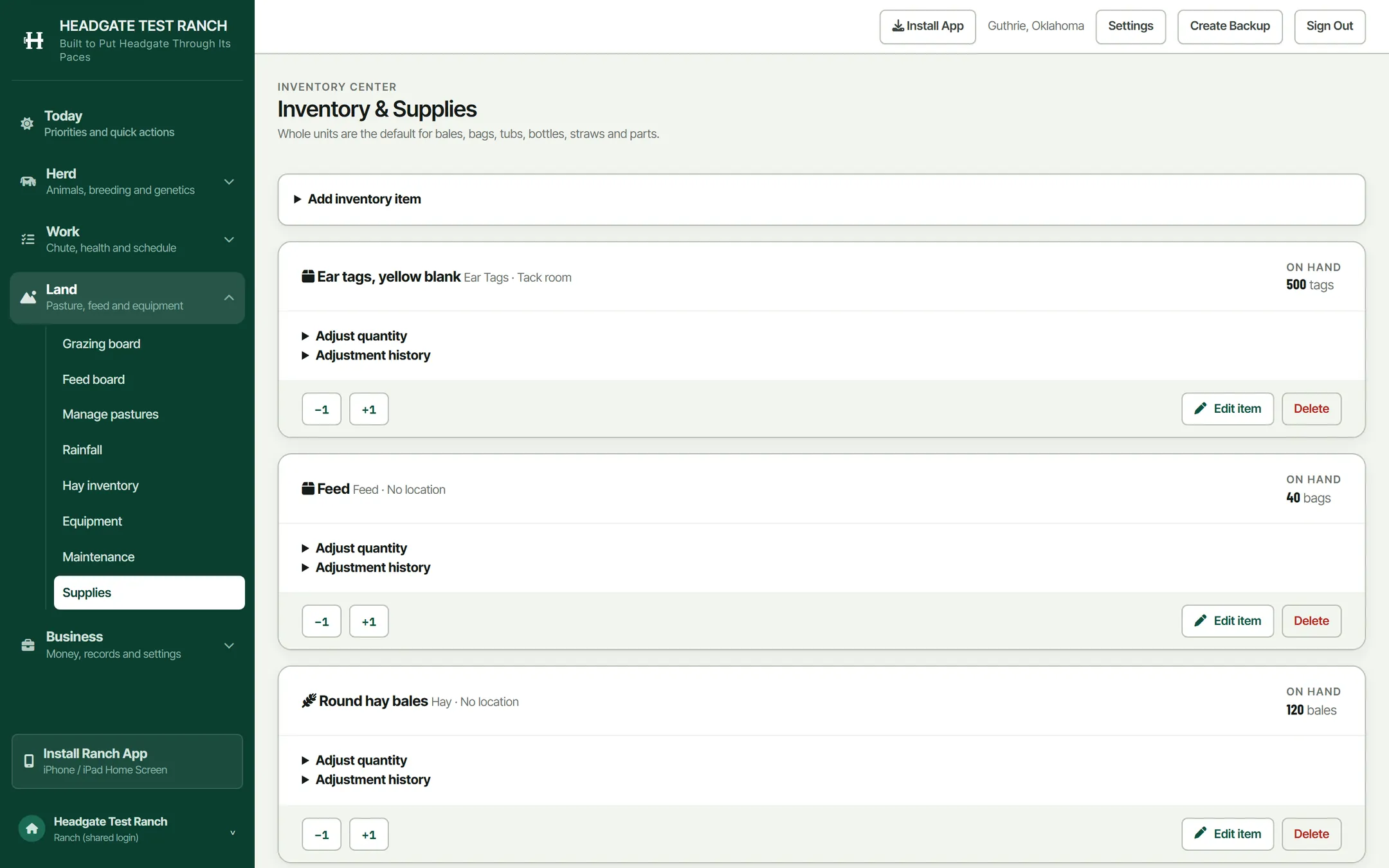
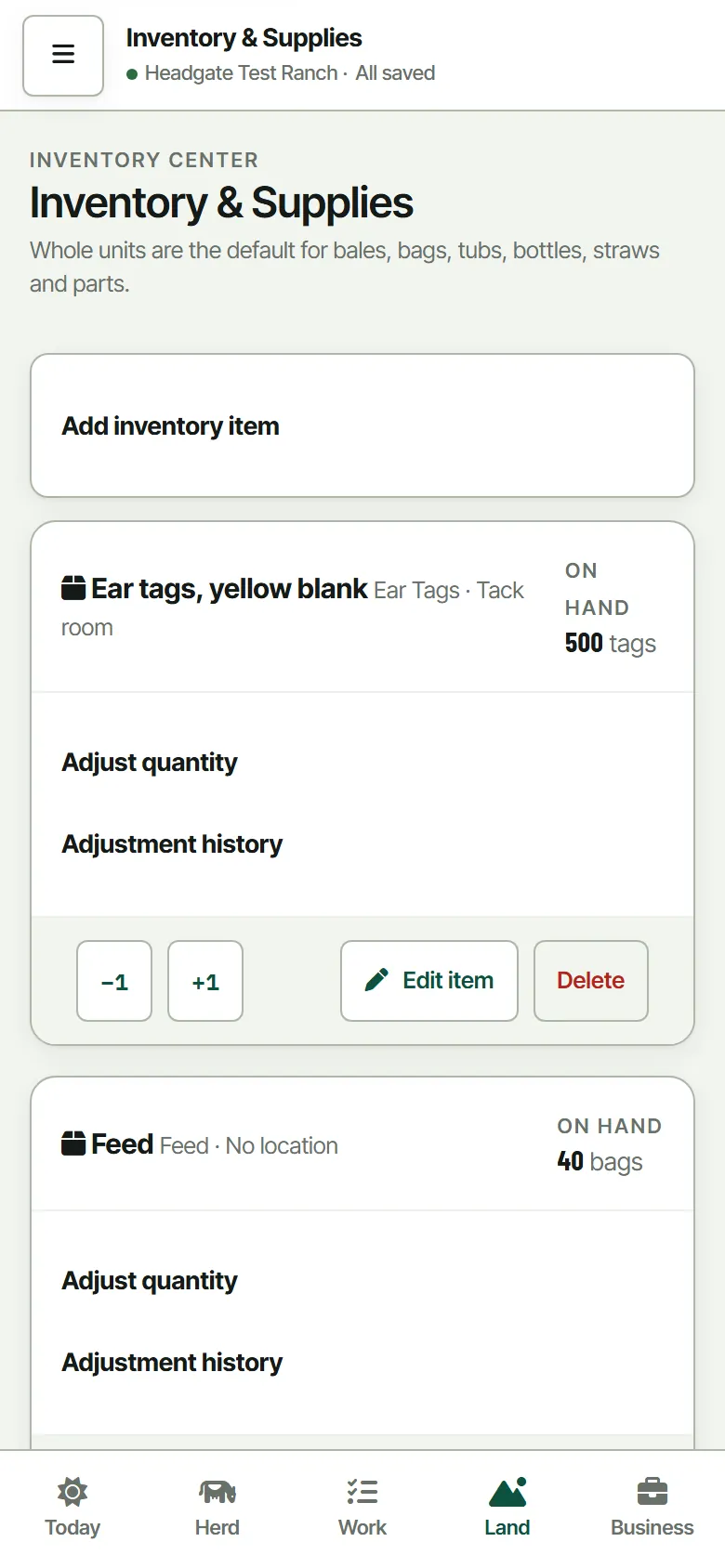
Oldest lot goes first.
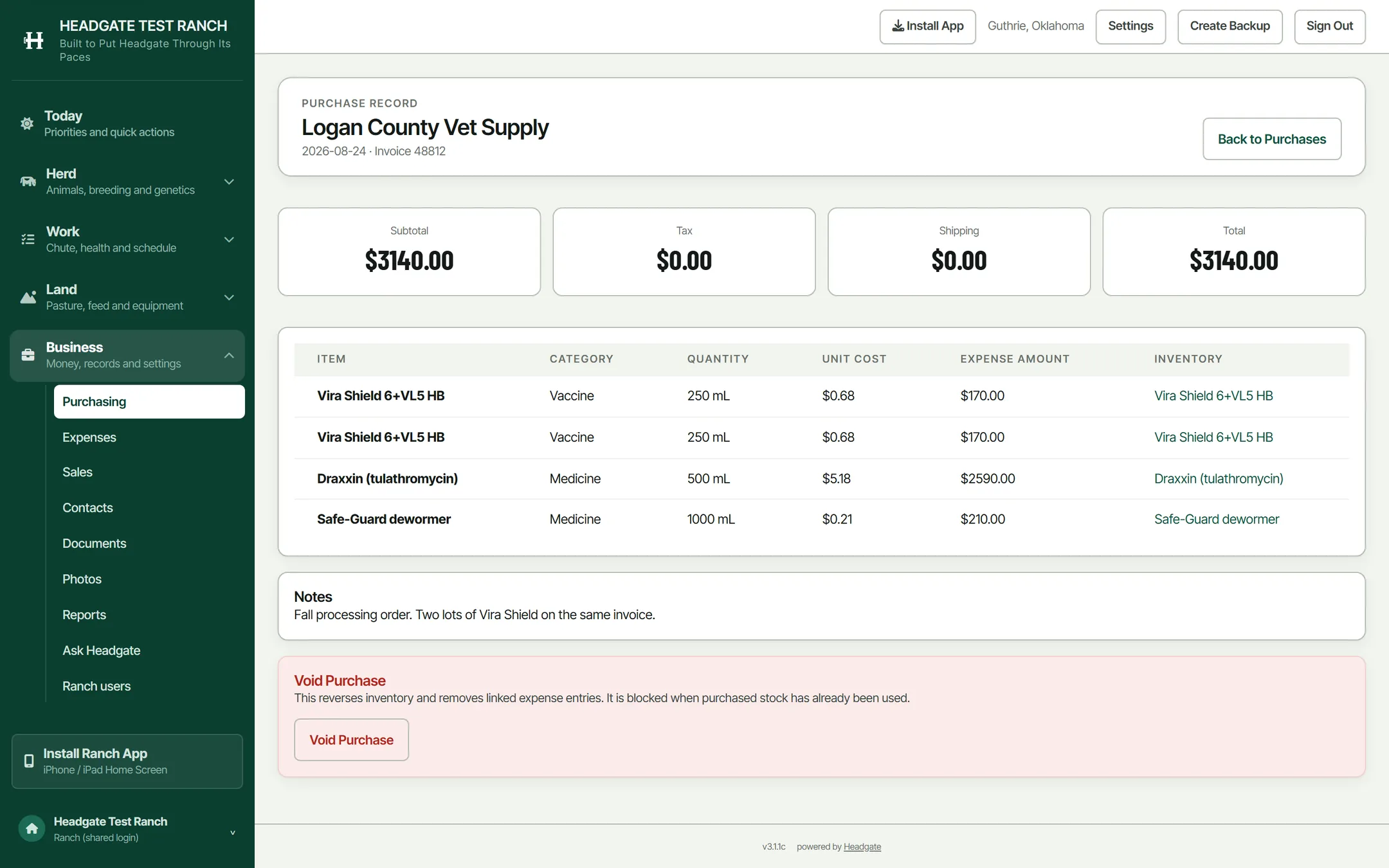
The vet supplier shipped two lots of Vira Shield on one invoice: one that runs out in March, one in November. Headgate keeps them apart. The first treatment given off that item came out of the March lot, and the record says so.
Nobody chose that. Nobody had to look at two boxes and work out which one was older. That is the whole feature.
- Lot VS6-2451A, expires 31 Mar 2027, drawn down first
- Held VS6-2604B, expires 30 Nov 2027, untouched
- Written The lot number lands on every health record it treated
One entry, three places
A purchase raises the quantity on hand, creates the lots with their expiry dates and unit costs, and files the expense against the right accounting treatment. There is no second screen where you tell the books what the barn already knows.
Expiry is a warning, not a footnote
Products that have gone out of date, or are about to, come up on the restrictions board under Pull from shelf. An out-of-date vaccine may not protect the animal you just put through the chute, which is a worse outcome than not vaccinating her.
Counts, and a record of counts
Adjust a quantity and it asks why: purchased, produced, used, fed, sold, reserved, or a correction. The history stays on the item, so a number that looks wrong can be traced back to the day it went wrong. Set a reorder level and the item flags itself low at or below it.