Treatments, labels, and what you cannot sell yet
Most treatments are recorded at the chute and land here. What matters afterwards is the lot it came out of and the day the hold clears.
The amount, not the label
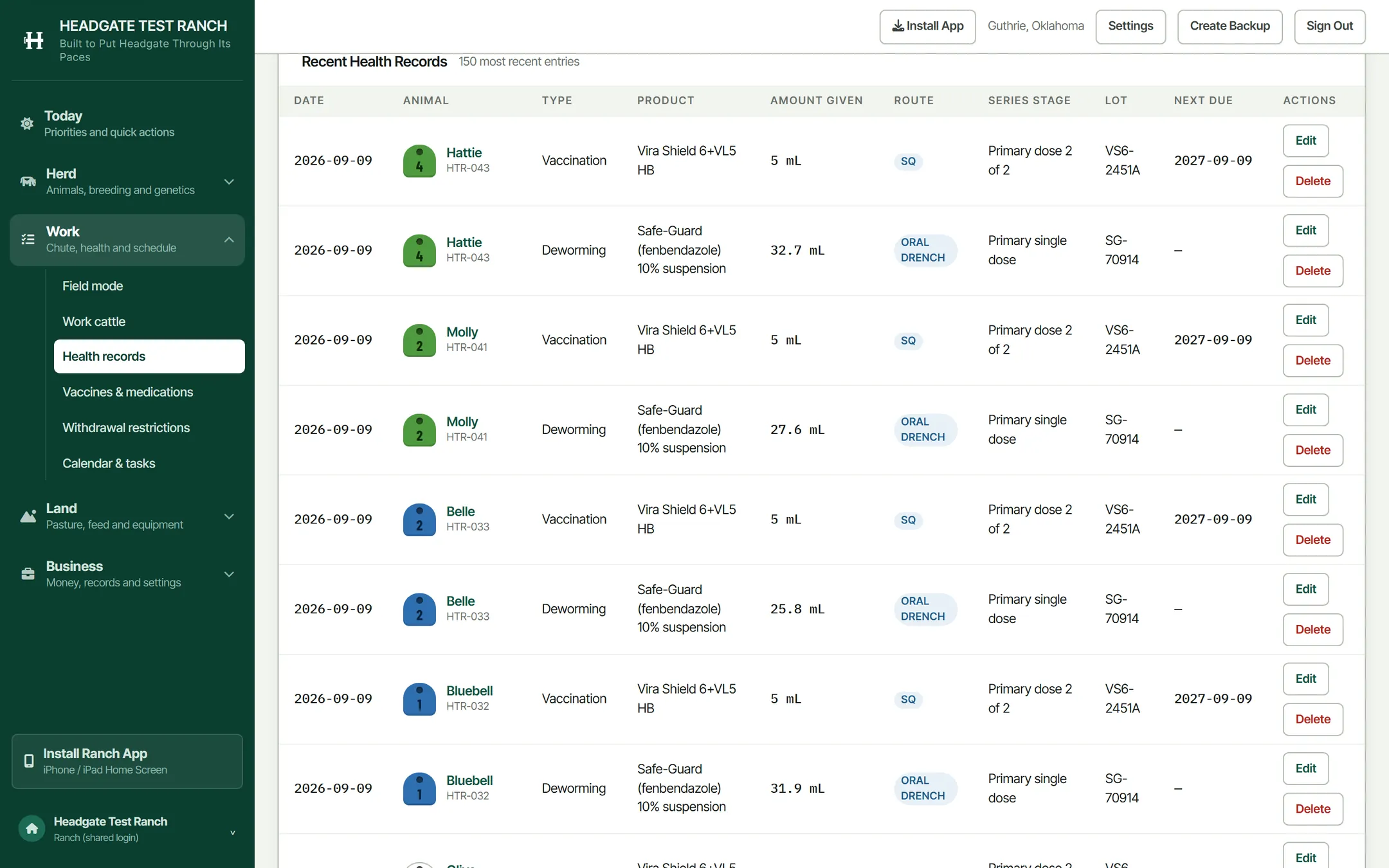
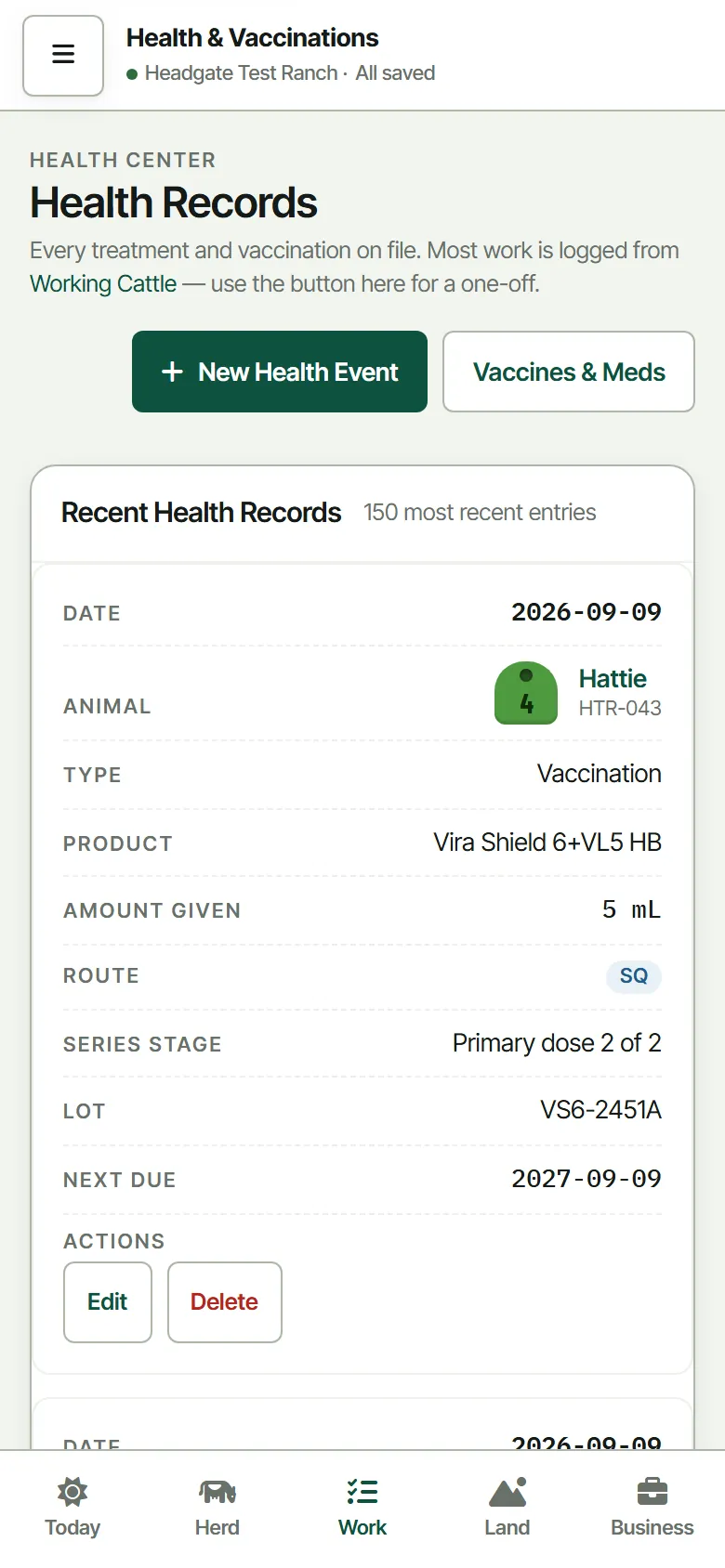
Safe-Guard is 2.3 mL per hundredweight. On a 1137 lb cow that is 26.2 mL, on an 1186 lb cow it is 27.3 mL, and both numbers are written down. Reading a row a year later tells you what went into that particular animal.
The lot goes on the record
If the product is linked to stock in your inventory, the lot number is captured without anyone typing it. When a manufacturer recalls a lot, the question "which of my cattle got that one" has an answer rather than a guess.
Series and next due
A two-dose vaccine knows it is on dose two of two, and sets the next due date from the label interval. Anything overdue turns up on the dashboard the morning it is overdue, not the week you happen to look.
The product library.
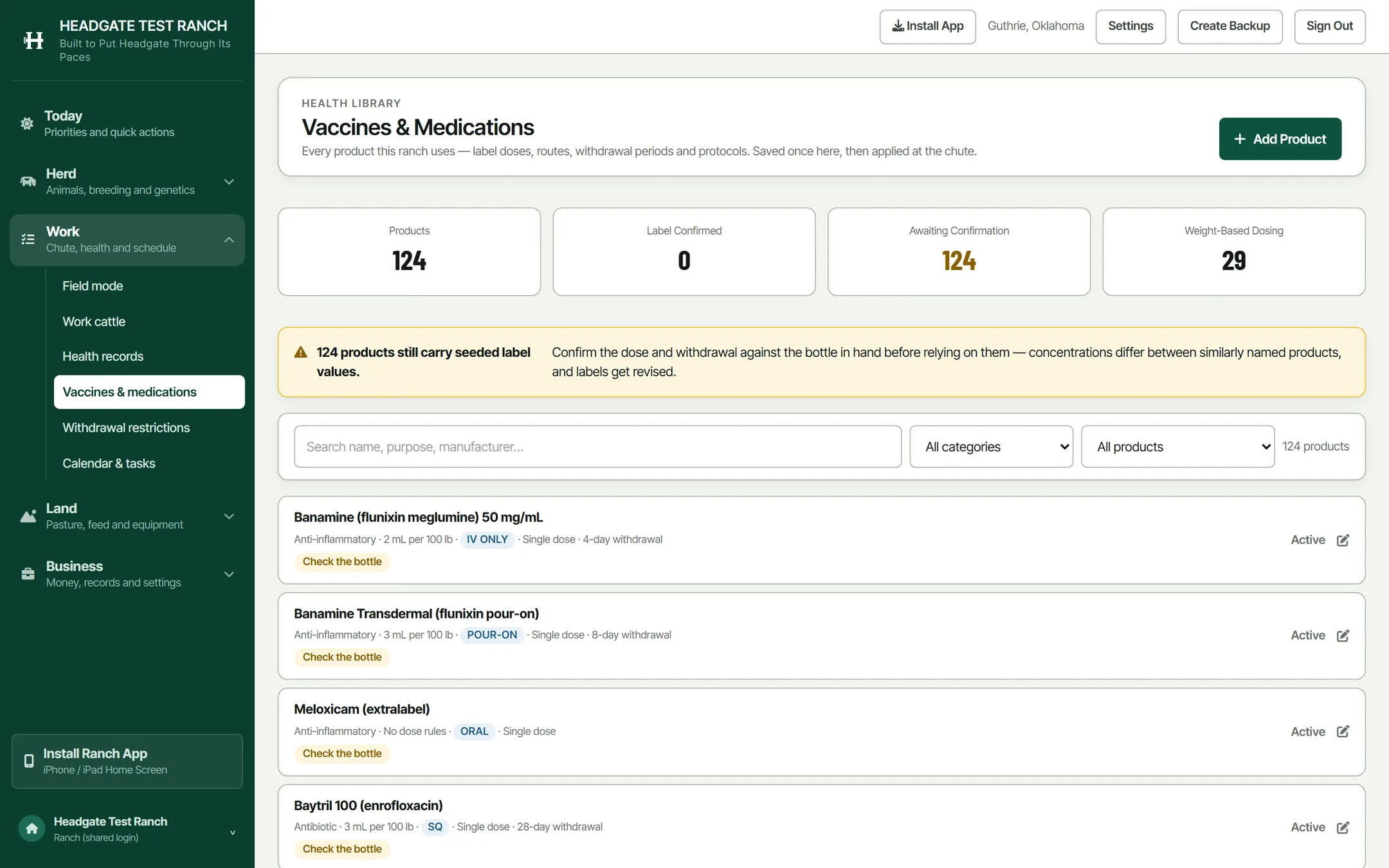
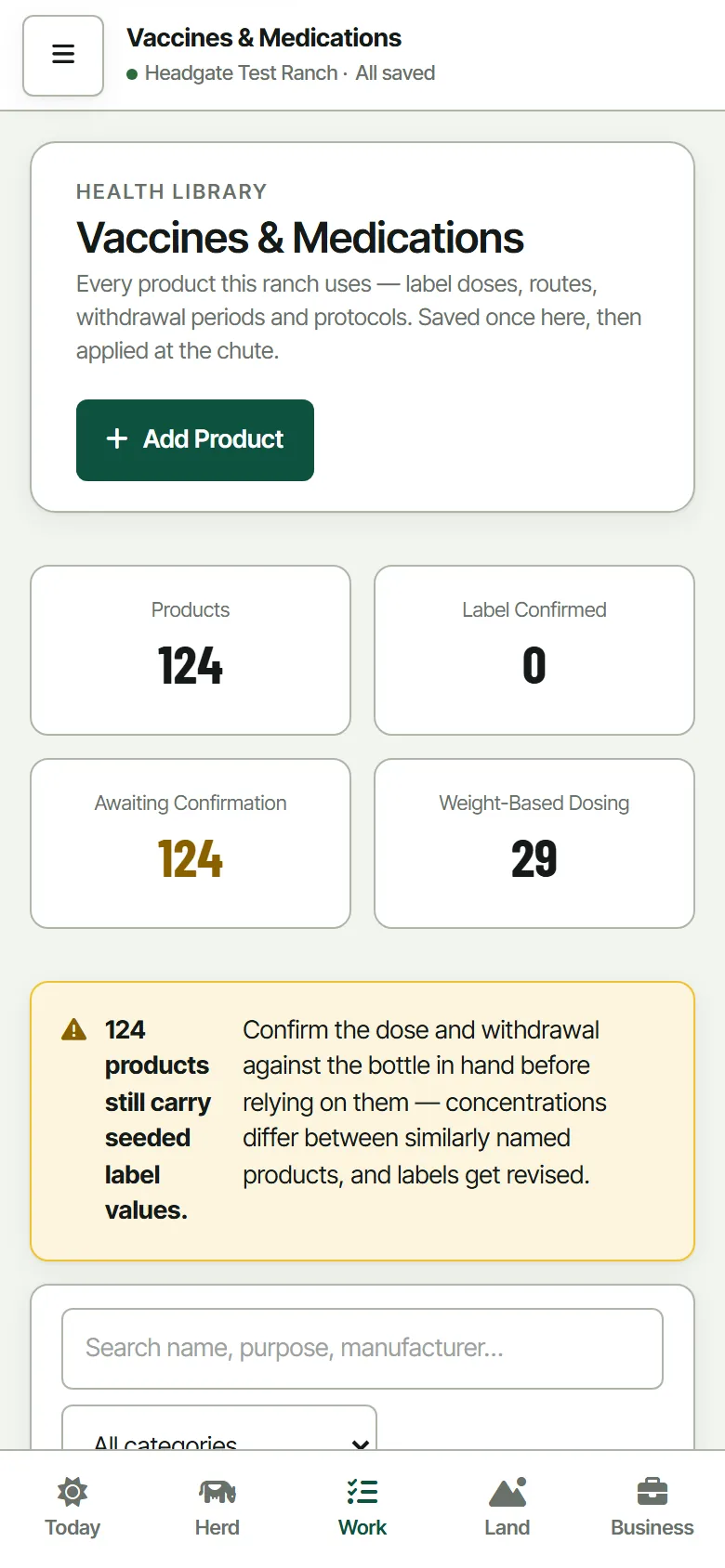
124 cattle products come loaded, each with the dose the label calls for, the route, and how long the meat and the milk are held.
Vira Shield 6+VL5 HB
5 mL SQ, neck · label dose per animal (cow) · meat
withdrawal 60d
The flag is the point, not an apology for it. Concentrations differ between products with nearly the same name, labels get revised, and a seeded number that nobody checked is exactly the kind of thing that ends up costing somebody a load of cattle. Confirm a product once and the flag comes off it.
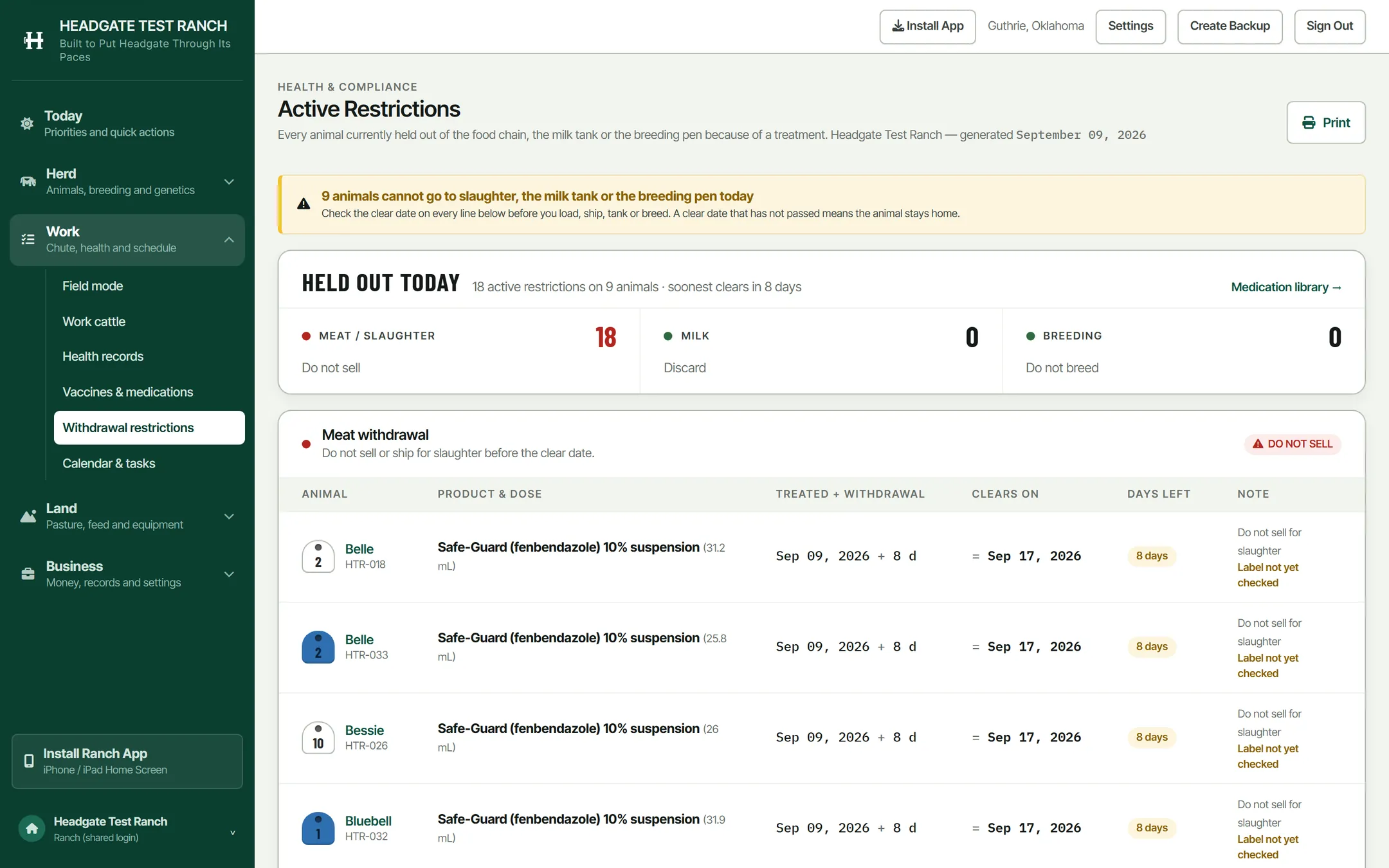
What you cannot sell today.
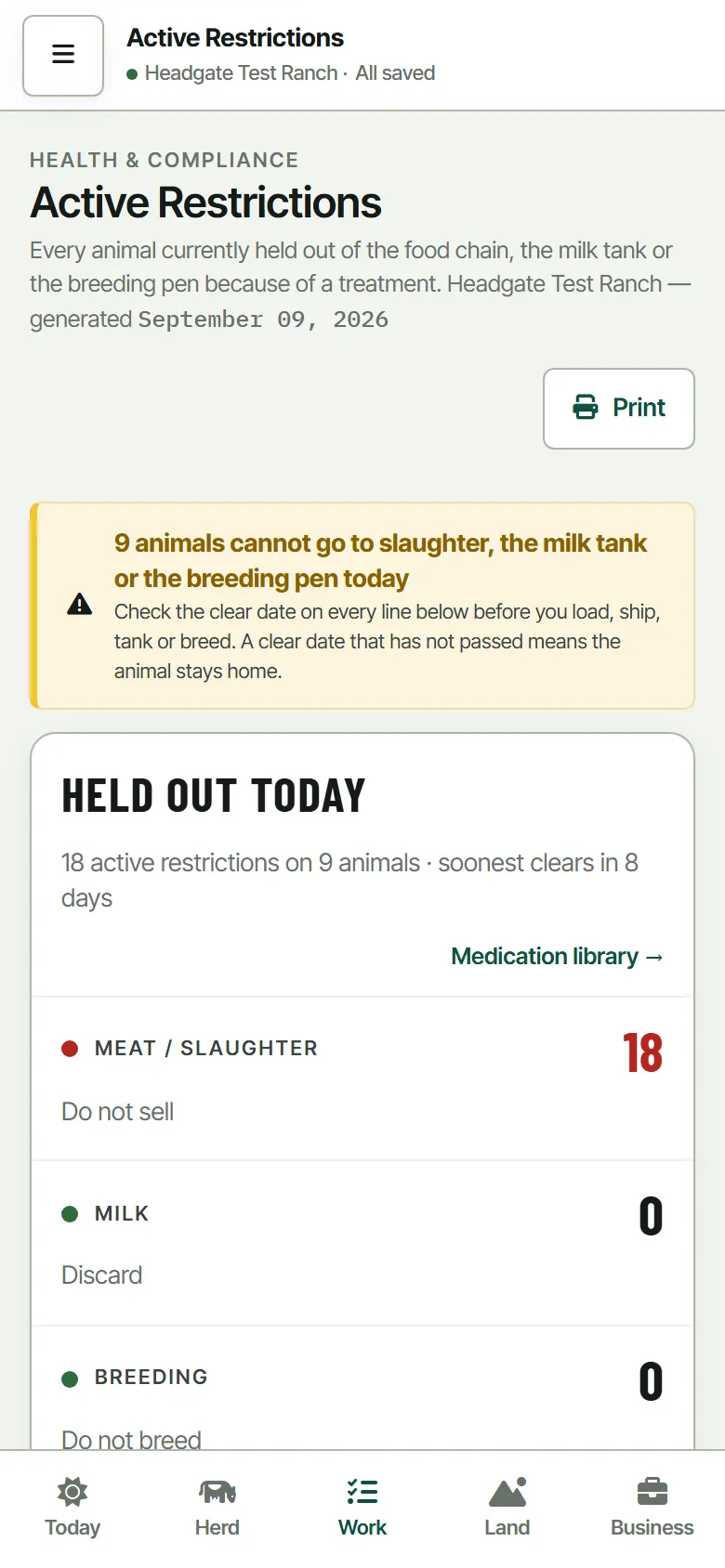
Every animal currently held out of the food chain, the milk tank or the breeding pen, with the treatment that put it there and the day it clears.
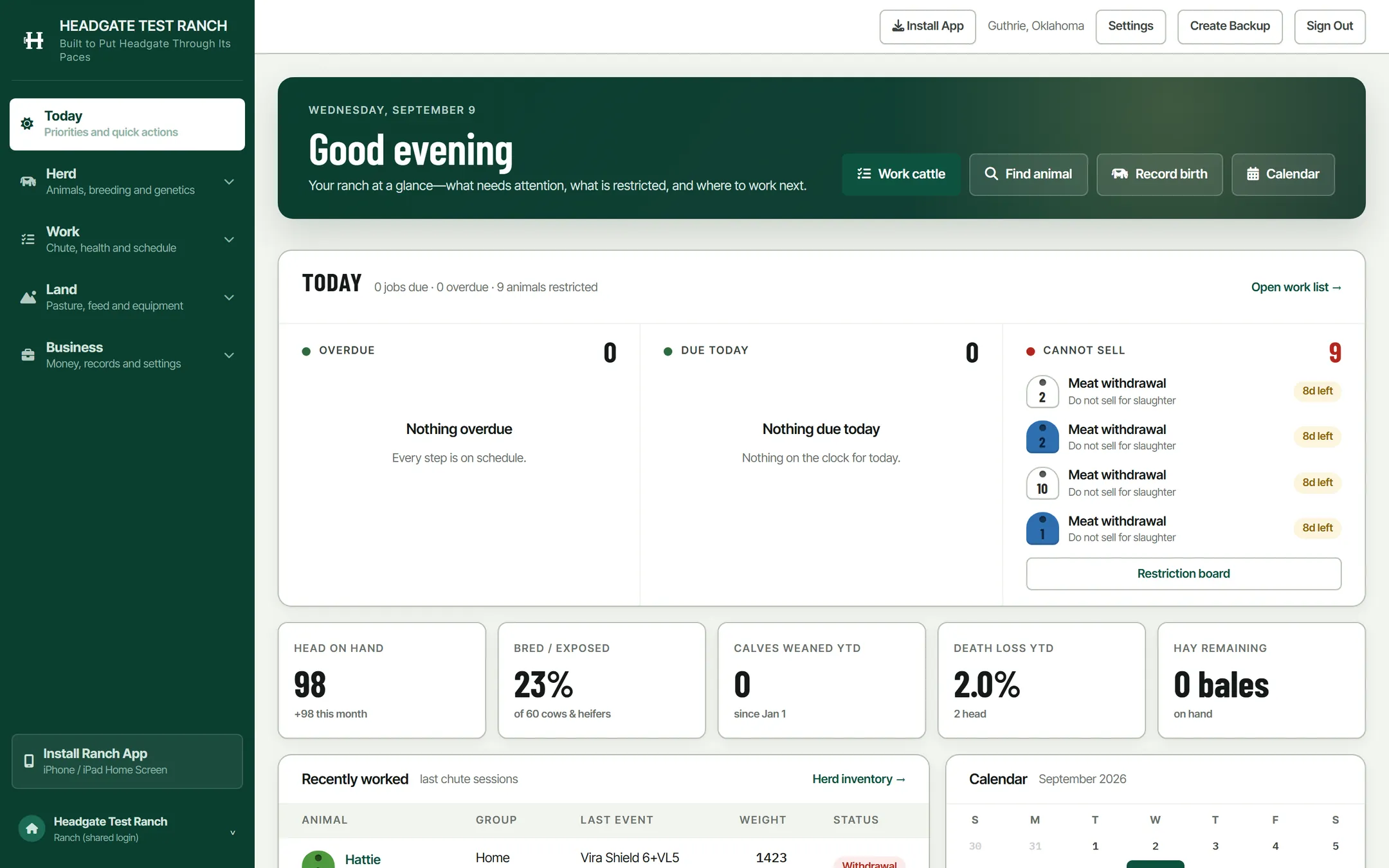
It reaches the dashboard
The count sits on the front page under Cannot sell, next to what is overdue and what is due today, with the days left on each one. It is not a report you have to remember to run.
And the animal's own page
Open a cow inside a hold and the warning is the first thing above her records, in red, with the clearing date spelled out. Not a badge you could scroll past.